Cute Happy Kids Eat Salad Vegetable: Evaluating Vector Illustration Sets for Your Next Project
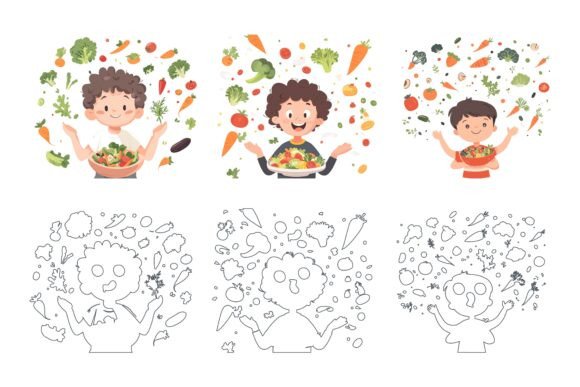
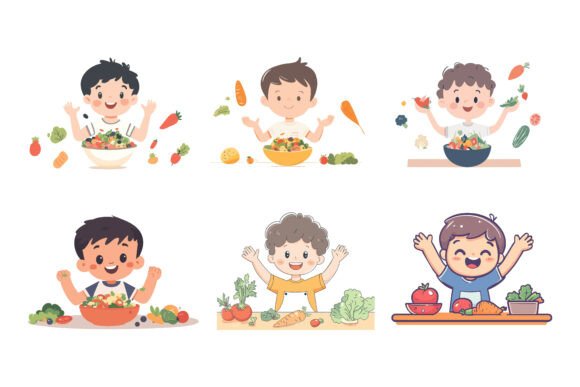
Visuals that feature children enjoying healthy food can instantly warm up a design—whether it’s a nutrition app, a school menu, or a parenting blog. The Cute Happy Kids Eat Salad Vegetable illustration set offers exactly that: a cheerful, detailed collection of children eating fresh vegetables. But what separates one vector pack from another isn’t just the subject matter. It’s how the files are built, how easily you can adapt them, and whether they fit your project’s technical and creative requirements. This article walks through what makes this particular set worth considering, how it compares with other approaches, and when it might not be the ideal fit.
What You Actually Get: Beyond the Preview Image
Thumbnails often tell a glowing story. To make a fair comparison, you need to look under the hood. The Cute Happy Kids Eat Salad Vegetable set comes with Adobe Illustrator (.AI), Encapsulated PostScript (.EPS), and high-resolution JPG files. That trio covers a lot of ground: AI and EPS for full editability and scaling, JPG for quick placement or preview. It’s also designed to work on both Mac and Windows—something not always guaranteed with older EPS formats that can break across operating systems.
A less obvious but critical advantage is the internal organization. According to its description, this collection features a neatly organized file and layer structure. In practical terms, that means you can isolate each child, each vegetable, or even a smile without untangling dozens of unnamed paths. For designers who’ve spent hours clicking through “Layer 35” in other packs, this alone can save a half-day of work. Perfection in details and consistency across the set also reduces the need to tweak one illustration so it matches the style of another—a common friction point in multi-character bundles.
How the Cute Happy Kids Eat Salad Vegetable Style Compares to Alternatives
Not all children’s food illustrations aim for the same emotional tone. Some are hyper-realistic, some are flat and minimalist, others are cartoonish with exaggerated features. This set lands in a sweet spot: expressive but not caricatured, colorful but not neon-bright, detailed enough for print yet still lightweight for screens. That balance makes it a versatile middle-ground choice when you’re comparing options.
Vector vs. Raster-Only Collections
Many affordable illustration bundles are raster-only (PNG or JPG). That’s fine for a blog header that will never change size, but it becomes a liability when you need to adapt a graphic for a billboard, a business card, or an app icon. The Cute Happy Kids Eat Salad Vegetable set gives you native AI and EPS files, which are infinitely scalable without losing quality. It also means you can recolor components directly in Illustrator, swap backgrounds, or repurpose individual elements. If you’ve ever tried to change a dress color in a flattened JPG, you’ll understand the difference immediately.
Editable and Customizable Icons vs. Locked Designs
Some vector sets look great but are built like a fortress—everything is expanded or merged into a single shape. That drastically limits how easily you can edit it. In contrast, the Cute Happy Kids Eat Salad Vegetable set is structured so you can edit, change colors, and modify the icon so easily according to your needs, as stated in its feature list. For a small business owner who needs to match brand colors without hiring a designer, or for a teacher creating custom classroom materials, that level of flexibility can determine whether a purchase actually gets used or sits in a downloads folder.
Where These Illustrations Shine: Practical Use Cases
Instead of trying to cover every possible scenario, it’s more helpful to think about where a cohesive, joyful set of children eating vegetables adds measurable value.
- Nutrition apps and meal planners: The positive emotional cue of kids enjoying salad can nudge users toward healthier choices. Layered files let you animate characters or integrate them into interactive interfaces.
- Educational content and infographics: Perfection in details and consistency means you can spread these illustrations across multiple pages without a disjointed feel. Teachers can use them to build a visual vocabulary around food groups.
- Printed posters and activity books: High-resolution JPGs are ready for 300 DPI printing, while AI files give print designers full control over bleeds and separations. The organized layers also help when you need to output award stickers or coloring page variations.
- Web banners and social media: Because the set includes both vectors and JPGs, a social media manager can quickly test multiple sizes without opening Illustrator, then hand off the editable original to a designer for a more polished campaign.
Decision Factors: When Cute Happy Kids Eat Salad Vegetable Might Be the Right Choice
There’s no universal “best” illustration set, only the right match for your constraints. The Cute Happy Kids Eat Salad Vegetable collection tends to be a strong fit under these conditions:
- You need a unified theme around healthy eating and childhood joy—not a random grab bag of food images.
- You require both print-ready and web-optimized assets from the same source.
- You or your team value time saved through well-named layers and organized file structure.
- You plan to recolor or remix the characters to align with seasonal campaigns or brand guidelines.
- You work across Mac and Windows and don’t want to troubleshoot font or compatibility issues.
Realistic example: A pediatric nutritionist creating a series of handouts for parents would likely find this set more beneficial than a set of generic vegetable icons. The emotional engagement of a smiling child matters in that context. On the other hand, a restaurant chain focusing on sophisticated, adult-oriented salad marketing might find the style too youthful.
Tradeoffs and Limitations to Keep in Mind
Every resource has boundaries, and being aware of them prevents unrealistic expectations. With the Cute Happy Kids Eat Salad Vegetable set, here are some points to consider:
- Style specificity: The “cute” and “happy” aesthetic can feel out of place in a corporate wellness report or a minimalist magazine layout. If your brand voice is formal or subdued, you may need something more abstract.
- Cultural representation: While the set depicts children enjoying salad, not all cultural food contexts look the same. Check if the vegetable varieties and children’s appearance align with the community you’re serving. If not, the ease of editing may let you make adjustments, but it’s worth assessing before purchase.
- File size and complexity: Highly detailed vector files can slow down older software or complicate export for very large printed pieces. This is a minor concern for most modern workflows, but it’s worth testing if you’re using lightweight devices.
- Not a clip art collection: This isn’t a sprawling 500-icon toolkit. It’s a focused set of characters eating salad vegetables. If you need a massive variety of actions, you’ll likely need to supplement it with other resources.
Comparing File Structures and Workflow Integration
One area where illustration sets differ dramatically is how they integrate into a professional workflow. A set that forces you to rasterize everything for a simple color change can slow down an entire pipeline. The Cute Happy Kids Eat Salad Vegetable set uses industry-standard formats that slip into most design stacks without friction.
Mac and Windows compatibility may seem like a basic checkbox, but cross-platform issues with EPS files can cause missing fonts or broken gradients. The creators explicitly designed for both operating systems, which suggests testing beyond a single environment. For agencies where designers switch between macOS and Windows, this reduces the “it worked on my machine” frustration.
Layer organization also matters more than many first-time buyers realize. When you open the AI file and see clearly labeled groups—background, child 1, salad bowl, fork—you can jump straight into customization. Compare that with a single-layer illustration where all paths are unnamed; even a simple task like removing a plate requires guesswork. The neatly organized, file, and layer structure described here saves real billable time.
When You Might Need a Different Option
No resource fits all scenarios, and being candid about that helps you allocate budget wisely. You may want to look at other illustration styles or formats if:
- Your project requires photorealistic images of children eating, not illustrated characters. In that case, stock photography would be more appropriate.
- You need animations already built—this set is static. You can create animations from the files, but it’s not a motion graphics template.
- You’re working in a program that doesn’t support AI or EPS well, and you need raw SVG files instead. While you can convert, a native SVG set might be more convenient for certain app development environments.
- Your budget is extremely tight and you only need a single image; a pay-per-image marketplace might be cheaper than a full illustration pack.
None of these points diminish the value of the set; they simply highlight that the best tool depends on the job. A researcher evaluating products would ask: “Will I actually use the editability, or will I download the JPG and never touch the layers?” If the answer leans toward the latter, you might be paying for functionality you don’t need.
Making a Confident Choice Based on Your Needs
Instead of getting swept up by charming thumbnails, use a short mental checklist when comparing the Cute Happy Kids Eat Salad Vegetable set with other options:
- Output channels: Am I printing, publishing on the web, using in an app, or all three? The AI/EPS/JPG trio here covers that spectrum.
- Customization depth: Will I need to change colors, reposition elements, or isolate characters? If yes, the organized layers and editable icons become a priority.
- Style longevity: Does the cute, happy aesthetic align with my brand over time, or is it a one-time campaign need? Consistent, warm illustrations often age better than hyper-trendy styles.
- Team skill level: Does someone on the team know how to edit vectors, or will they rely on the JPG versions? The set accommodates both, which reduces dependency on a single designer.
By answering these questions honestly, you’ll quickly see whether this illustration set slots naturally into your workflow or if you should continue exploring category alternatives. The goal isn’t to declare one resource superior; it’s to find the resource that reduces friction while enhancing your message. When healthy eating for children is the core message, a cohesive, well-constructed visual like Cute Happy Kids Eat Salad Vegetable often becomes a quiet but powerful design partner—one that respects your time by being ready to adapt, not just ready to download.
The Value of Organized, Editable Design Assets
In many creative fields, the true cost of an asset isn’t its purchase price; it’s the time spent wrestling it into submission. A vector set that comes with an untidy, unlabeled file structure can consume hours—time that small studios and solo practitioners cannot afford. The Cute Happy Kids Eat Salad Vegetable collection addresses this head-on with its commitment to neat organization and cross-platform design. This focus on workflow harmony is worth considering alongside visual quality.
Additionally, assets suitable for print, web, symbols, apps, and infographics reduce the need to license multiple resources for one campaign. When you can pull the same core illustration into a brochure, a landing page, and an app icon, brand consistency rises naturally. Just as important, you retain the ability to modify rather than replace when design direction shifts slightly—a flexibility that locked bitmap files simply can’t provide.
Final Thoughts on Suitability
The Cute Happy Kids Eat Salad Vegetable illustration set occupies a practical niche: it’s adaptable enough for professional design work but straightforward enough for educators and business owners who aren’t Illustrator experts. Its strengths lie in thoughtful preparation—layers that make sense, compatibility that spans platforms, and a cheerful consistency that builds trust in health-focused communication. At the same time, its specific style means it won’t serve every brand identity. By weighing your actual daily workflows, editing needs, and audience expectations against what this pack offers, you’ll make a decision rooted in functionality rather than impulse. In a market saturated with visual assets, that kind of clarity is what turns a simple purchase into a long-term design tool.