Six Petals Flower Process Chart. Busines: A Creative Canvas for Strategic Thinkers
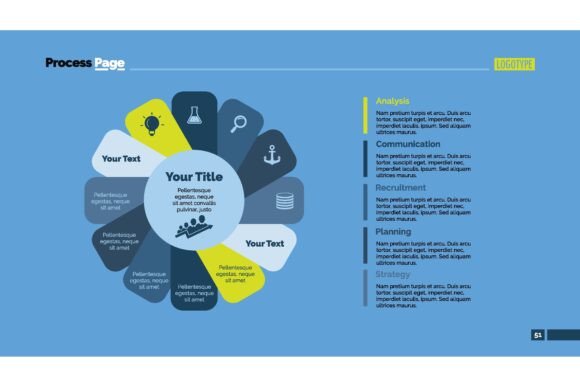
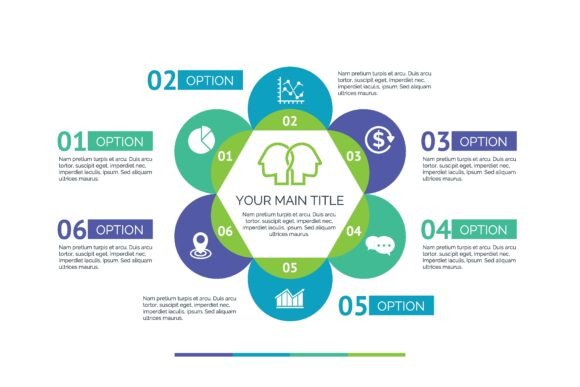
There is a quiet confidence that comes with presenting a complex idea and watching it land effortlessly. A visual that speaks before you do, carrying layers of meaning in a single glance. The Six Petals Flower Process Chart. Busines does exactly that—it takes the tangled threads of business strategy, planning, and communication and arranges them into a form that feels almost meditative. Imagine a symmetrical bloom where each petal holds a core concept, an option, a step, or a truth about your project. It works because our brains are wired to find pattern and symmetry comforting, making the information not just understandable but memorable. Whether you need to outline a multi-phase initiative, explain a decision framework, or simply show how different pieces connect to a central purpose, this graphic tool offers a canvas that is equal parts art and function.
Beyond its aesthetic appeal, the Six Petals Flower Process Chart. Busines invites you to distill the essential. You cannot load thirty bullet points onto a petal; you must choose the six most vital elements. That constraint is where the magic lives. It pushes teams to prioritize, to find clarity, and to align on what really matters. The result is a communication piece that does not overwhelm but gently guides your audience toward understanding. Across industries, from corporate boardrooms to creative agencies, people are turning to this petal-based model to anchor presentations, shape infographics, unify marketing messages, and even map out personal career plans. What follows is a deep exploration of how this unassuming diagram can become a trusted ally in your daily work, peppered with real-world situations where its thoughtful design shines.
Where the Six Petals Flower Process Chart. Busines Finds Its True Purpose
You do not have to search long to discover environments that benefit from a simpler visual language. Think of a mid-sized technology company rolling out a new customer onboarding journey. Traditionally, a project manager might craft a linear flowchart with boxes and arrows that, while accurate, often glazes over the eyes of stakeholders. Replace that with the Six Petals Flower Process Chart. Busines, and suddenly the six key stages—Discovery, Setup, Personalization, Training, Integration, Support—radiate around the central goal of “Seamless Customer Activation.” Each petal becomes a talking point, a micro-narrative that can be expanded or condensed depending on the room. The symmetry helps everyone immediately grasp that all six components are equally crucial and interconnected, rather than suggesting a hierarchy that might undervalue, say, Integration.
The tool proves equally effective in strategic planning sessions. A leadership team defining their annual priorities can use the six petals for six strategic pillars. Instead of a dense report that few will read, a single-page flower chart pinned to a wall or shared digitally becomes the group’s North Star for the year. It humanizes strategy. When an employee sees “Customer Empathy” as one petal right beside “Operational Efficiency,” they begin to internalize the balance the organization seeks. This is the chart’s superpower: translating abstract corporate intentions into something almost tactile.
Marketing departments also find fertile ground here. A product launch often involves coordinating messaging across multiple channels. The Six Petals Flower Process Chart. Busines can map six core channels or six key messages, with the brand promise at the center. This ensures that every piece of the campaign feels cohesive. Similarly, sales teams can outline six distinct value propositions for different buyer personas, making consultative conversations more fluid. Even in internal communications, when explaining changes like a hybrid work policy, six components—such as scheduling, technology, collaboration norms, well-being, performance, and physical space—can be presented in a way that reduces anxiety and invites dialogue.
Who Benefits Most from this Visual Tool
While almost anyone tasked with communicating intricate information can benefit, certain roles seem to forge an especially natural partnership with the Six Petals Flower Process Chart. Busines. Project managers and business analysts use it to clarify scope and deliverables, turning ambiguous requirements into a structured yet friendly visual. Consultants adopt it as a reliable format for executive summaries, breaking down a client’s challenges and recommendations without drowning them in details. The design itself signals that the consultant has done the hard work of synthesis.
Educators and trainers discover that the flower metaphor resonates with learners. A workshop on problem-solving, for instance, can center around six thinking modes (analytical, creative, empathetic, logistical, collaborative, reflective). Participants can literally fill in petals during exercises, making abstract theory tangible. Entrepreneurs and small business owners, who must wear many hats, often sketch out their own Six Petals Flower Process Chart. Busines on a whiteboard to map business model components—value proposition, customer segments, channels, revenue streams, key activities, key resources. It becomes a living document that evolves with the venture, far more approachable than traditional frameworks.
Also, creative professionals—graphic designers, content strategists, and brand managers—embrace the petal chart as both a content container and a design element. Because of its organic shape, it softens communication that could otherwise feel rigid. A publisher might use it to illustrate six genres they specialize in; a non-profit could showcase six program areas, each petal a story of impact. The visual invites emotional connection because flowers are universally associated with growth, vibrancy, and life.
Practical Scenarios That Bring the Petals to Life
Picture a healthcare administrator designing a patient experience model. The Six Petals Flower Process Chart. Busines can represent six touchpoints: Scheduling & Intake, Diagnosis, Treatment Selection, Ongoing Care, Billing & Insurance, Follow-up & Feedback. By placing the patient at the center, the administrator reminds every department that their petal is meaningful only in relation to the person receiving care. The visual becomes a poster in break rooms, a slide in staff training, and a reference during process improvement meetings. It also sparks conversations: “What if we added a petal for emotional support?” The flexibility to adapt while maintaining structure is invaluable.
In the world of software development, a team might use the chart to illustrate a product’s ecosystem. Six petals could represent core features, integrations with other tools, user roles, or even six agile practice principles. When onboarding new developers, this one image communicates more in sixty seconds than a hundred-page technical specification. The shared mental model reduces misalignment and fosters ownership because each team member can visually pinpoint how their work contributes to the whole.
Still another scenario involves career coaching. An individual feeling stuck can map their professional development around six growth areas—such as technical skills, leadership, networking, personal branding, financial acumen, and well-being. The center holds their career vision. The Six Petals Flower Process Chart. Busines becomes a personal strategic plan that fits on a note card. It feels less like a corporate mandate and more like a mindful practice, which aligns perfectly with the notion of unleashing that “Zen” of business acumen mentioned in its description.
Why Symmetry and Simplicity Speak So Loudly
Cognitively, our brains appreciate balance. When we see a flower with evenly spaced petals, a subtle sense of order allows us to focus on content without mental fatigue. This makes the Six Petals Flower Process Chart. Busines especially powerful for audiences who may not be experts in the subject matter. An investor pitch deck, for example, often fails because too much complexity breeds skepticism. Replace a daunting table with six petals highlighting market opportunity, traction, team, product moat, go-to-market, and financial projections, and suddenly the story feels coherent and trustworthy. The visual says, “We have thought this through carefully.”
Furthermore, the circular, non-linear design encourages holistic thinking. Unlike a numbered list that implies one element must come first, the flower suggests all six aspects coexist and interact. This matters in fields like sustainability consulting, where you might map six dimensions of impact—environmental, social, governance, economic, cultural, technological—around a central mission. The mutual interdependence becomes visible instantly, which a bulleted document struggles to convey.
Strengths and Gentle Limitations to Keep in Mind
One of the clearest strengths of the Six Petals Flower Process Chart. Busines is its memorability. Information arranged radially tends to stick because it engages both verbal and visual memory pathways. When you recall the central idea, the petals naturally unfold in your mind’s eye. This is why it excels in high-stakes presentations where retention matters. Another strength is its adaptability to different media: from hand-drawn sketches in a notebook to polished digital infographics, the petal motif translates seamlessly.
There are, of course, situations where forcing exactly six elements onto a process could become a limitation. Not every topic naturally splits into half a dozen components. Trying to cram a five-step process into six petals might water down the clarity you seek, or adding a placeholder just for symmetry could confuse the audience. The tool works best when you genuinely have six core elements or can thoughtfully group broader concepts. And if you have seven or eight, you risk either overload or the need to leave out critical pieces. The solution is not to distort your content but to use the Six Petals Flower Process Chart. Busines for moments when six is the perfect number, or to creatively combine related sub-topics so the integrity remains.
Another gentle consideration: while the flower shape is inviting, it may not project the gravitas expected in heavily regulated industries like law or certain financial sectors unless designed with appropriate restraint in color and typography. Choosing muted tones and clean lines often overcomes this. The essence of “Zen” in the chart is not about being whimsical but about achieving a tranquil clarity that even the most serious analyst appreciates.
Bringing the Six Petals into Your Daily Work
Starting with the Six Petals Flower Process Chart. Busines does not require specialized software. Many professionals begin with pen and paper during a brainstorming session, sketching a center circle and six surrounding petal shapes. The act of drawing itself can clarify thinking. Later, you can refine with tools like presentation software or vector graphic programs. Templates exist, but customizing colors, labels, and even adding subtle leaf elements that suggest growth can align the chart with your brand’s visual identity.
Think about your next meeting where you need to propose a complex initiative. You might open with a single slide showing the flower, placing the key outcome in the center and the six support pillars in the petals. Watch how the conversation shifts from “That’s a lot of information” to “Tell me more about each petal.” That shift is the visual story blooming. When colleagues later recall the idea, they will likely remember the flower, not a spreadsheet. Over time, you might build a small library of flower charts for recurring frameworks in your organization—a crisis response model, a customer feedback loop, a culture code—each one reinforcing a shared language.
The Six Petals Flower Process Chart. Busines ultimately reminds us that business acumen is not just about analysis and numbers; it is about perception, relationship, and the art of making the complex feel simple. By treating your message as a seed that can blossom into a clear, balanced visual, you invite others to see the world the way you do. And in a landscape crowded with noise, that quiet invitation might be the most persuasive tool you own.