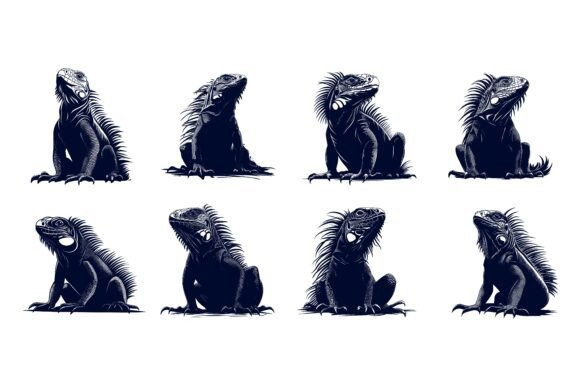
Understanding the Iguana AI EPS Illustration Set: A Practical Guide for Designers and Decision-Makers
When a project calls for crisp, scalable artwork, designers often weigh pre-made illustration collections against custom options. Among the many specialized bundles available today, the Iguana AI EPS set has drawn attention for its detailed construction, organized file structure, and cross-platform flexibility. This article takes a closer look at what the set offers, how it compares with common alternatives, and where it fits best in a real-world creative workflow. No single resource suits every need, so the goal here is to help you assess whether Iguana aligns with your current design priorities, timelines, and technical environment.
What Exactly Is the Iguana Illustration Collection?
At its core, the Iguana set is a carefully assembled library of vector illustrations delivered in industry-standard Adobe Illustrator (AI) and Encapsulated PostScript (EPS) formats. A high-resolution JPG version is also included, which can serve as a quick reference or be used in layouts that do not require vector scalability. The files are designed to work seamlessly on both Mac and Windows systems, so no platform gymnastics are needed. Beyond the file types, the set emphasizes internal organization: layers are logically named, grouped, and arranged, which means you can locate individual elements—like a specific icon or a background shape—without wading through a flat, puzzling canvas. This level of neatness is often missing from free or rushed illustration packs.
The visual style of the Iguana collection tends toward clean lines, balanced proportions, and a consistency that holds up across dozens of individual assets. Because each piece is built with a shared design language, they can be combined without clashing. That cohesion is invaluable for infographics, app interfaces, presentation decks, and any project where multiple illustrations must feel like part of the same family. The files also allow easy color adjustments and shape modifications, so you are not locked into a single visual treatment. This editability, paired with the organization, makes the set appealing to anyone who needs to integrate artwork quickly without sacrificing polish.
Key Features That Set the Iguana Collection Apart
While many illustration packs promise quality, Iguana’s design decisions address several practical friction points that working designers encounter. Here are the standout characteristics that tend to matter most in daily use:
- Neatly organized file and layer structure: Instead of a single “Layer 1” with hundreds of unlabeled paths, you get a thoughtfully divided canvas. This saves time when you need to isolate an icon for an app button or recolor only one section of a complex scene.
- Perfection in details and consistency: Line weights, corner radii, and spacing remain uniform across the set. When you pull illustrations into a dashboard or a multi-page brochure, they read as a coherent unit rather than a mixed bag.
- Multi-format inclusion: AI and EPS provide the full vector flexibility for resizing without degradation, while the JPG gives a ready-to-use raster fallback. This trio covers everything from large-format print to web use without extra file conversion steps.
- Easy color and shape editing: Because the vectors are well-constructed, you can change global colors, tweak individual fills, or adjust shapes to fit a brand palette with minimal effort. There is no need to reverse-engineer poorly built clipping masks.
- Cross-platform reliability: Files open as expected on both Mac and Windows, which reduces friction in mixed-environment teams. No font or compatibility surprises.
These details may seem small in isolation, but together they determine whether an illustration pack becomes an everyday asset or a folder that sits unused after one frustrating attempt.
How the Iguana Set Compares With Other Illustration Options
To make an informed choice, it helps to place Iguana alongside the broader landscape of visual resources. Different project constraints—budget, timeline, uniqueness requirements, and technical skill—can shift which option makes the most sense.
Pre-Made Packs vs. Custom Illustration Work
Custom illustration, whether from an in-house artist or a freelancer, offers complete control over style, metaphor, and messaging. You can craft imagery that perfectly mirrors a brand’s voice and specific content. The tradeoff is time and cost: custom work often takes weeks and involves multiple rounds of feedback. Iguana, as a ready-made set, can be downloaded and deployed in minutes. For a startup building a minimum viable product or a marketing team racing toward a campaign deadline, that speed is hard to overlook. However, because the set is not exclusive, another company could use the same illustrations. If absolute visual uniqueness is a core brand requirement, a custom route or heavily modified Iguana elements may be necessary.
Vector vs. Raster Resources
Some design projects still rely on raster graphics—PNGs or JPEGs downloaded from image sites. These work for final placement at fixed sizes, but they break down when you need to scale an icon for a billboard or adapt artwork for a responsive web layout. The Iguana set’s AI and EPS files maintain crisp edges at any dimension, which is critical for logos, app symbols, and print materials. The included JPG is a convenience, not the foundation. If you predominantly work with pixel-based editing and rarely need vectors, the full power of the set might be underused. But for anyone producing assets that must live across multiple resolutions, the vector-first approach is a significant advantage.
Free Collections vs. Paid, Organized Libraries
Free illustration packs can look appealing when budgets are tight, but they often come with hidden costs. Inconsistent style, missing file formats, unclear licensing, and flat, disorganized artwork are common. Iguana represents a paid alternative where those pain points have been deliberately addressed. The per-asset cost, when spread across a commercial or recurring project, is usually modest compared to the hours saved on cleanup and standardization. The decision often comes down to whether your time or your immediate cash outlay is the bigger constraint. For a freelance designer juggling multiple clients, the efficiency gain from a well-organized set can easily justify the price.
Strengths and Practical Advantages
The strengths of the Iguana set become most visible during active work. Consider a designer assigned to build a series of onboarding screens for a mobile app. The screens require a consistent set of illustrated icons for navigation, status indicators, and feature explanations. With Iguana, the designer can pull icons that already share a uniform visual weight, adjust their colors to match the brand palette in a few clicks, and export them at the required resolutions. There is no need to create base shapes from scratch or struggle with mismatched artwork from different sources. The same logic applies to an infographic designer who needs 20 coordinated symbols for a health report or an educator creating engaging presentation materials. In each case, the time saved searching, aligning, and reformatting is tangible.
Another strength is the low barrier to editing. Not every team member who touches design assets is an experienced illustrator. A marketing coordinator might need to tweak an illustration’s colors for a seasonal email template. Because the files are logically structured and use clean vector paths, such adjustments are within reach for someone with basic Adobe Illustrator skills. This broadens the set’s usefulness beyond the core design department.
Where the Iguana Set May Not Be the Ideal Choice
No product fits every scenario perfectly. The Iguana collection carries a distinct stylistic stamp. If your brand identity already leans toward a radically different visual language—hand-drawn, textured, gritty, or highly abstract—these clean, precise illustrations may feel misaligned. Forcing them into a brand that does not mesh stylistically can dilute the brand’s unique presence. In such cases, a pack from a different stylistic family or a commissioned illustrator would be a better fit.
Additionally, if your project demands complete ownership and originality—such as a flagship product launch where every visual detail will be scrutinized—a stock pack, no matter how well-crafted, may not provide the differentiation you need. Heavily modifying the Iguana files can mitigate this, but you must be willing to invest the extra editing time. There is also the licensing consideration: always check that the usage terms align with your intended commercial application, as is standard practice with any illustration resource.
Real-World Scenarios That Favor the Iguana Illustration Set
Understanding the typical contexts where this set thrives can sharpen your evaluation. Here are a few examples grounded in everyday project realities:
- App and web interface design: A UX team needs a set of category icons, onboarding illustrations, and dashboard widgets that feel like a unified system. The Iguana set’s consistency and editability allow rapid prototyping and high-fidelity final assets without a custom illustrator.
- Corporate infographics and reports: An analyst producing a quarterly report wants to include clear, professional diagrams and symbolic illustrations. The vector files can be scaled to fit various column widths and recolored to match corporate branding guidelines in minutes.
- Print collateral such as brochures and flyers: A small business creating event materials can benefit from the detailed, print-ready vector artwork. The organized layers make it simple to adapt graphics for both a trifold brochure and a large poster.
- Educational and presentation content: An educator designing slide decks or e-learning modules can quickly access a library of related illustrations that maintain a steady visual tone, reducing the cognitive load on learners.
In each scenario, the common thread is the need for speed combined with a refusal to sacrifice visual quality. The Iguana set’s design decisions directly support that balance.
Important Decision Factors When Evaluating Illustration Resources
Whether you are leaning toward Iguana or another option, several factors deserve a hard look before committing:
- Compatibility with your existing tools: Confirm that your team uses software that can fully utilize AI and EPS files. Adobe Illustrator is the natural home, but many alternatives like Affinity Designer and CorelDRAW can also work with vector formats, sometimes with minor adjustments.
- Customization requirements: If you anticipate heavy alterations—remixing shapes, combining elements from multiple packs, or creating derivative styles—Iguana’s organized layers and clean construction will make that process much smoother than a poorly built pack would. If you need zero editing and simply want drop-in images, a simpler solution might suffice.
- Volume and variety: Look at the quantity and range of illustrations in the set relative to your needs. A deep library that covers multiple categories is more versatile than a narrow one. Iguana appears designed to span several common thematic areas, which increases its utility across projects.
- Long-term value: Unlike a themed pack tied to a single trend, a well-structured, general-purpose vector set can remain useful for years. The editable nature means you can update colors and styling to match evolving brand guidelines, extending its lifespan.
- Learning curve: For team members who are not full-time illustrators, the time required to learn how to open, ungroup, and recolor the files matters. Iguana’s organized approach lowers this hurdle significantly compared to disorganized alternatives.
Making an Informed Choice That Fits Your Workflow
The decision to use the Iguana AI EPS illustration set—or any pre-made resource—ultimately comes down to aligning its strengths with your specific constraints. If you are operating under tight timelines, need a cohesive visual system that plays nicely across digital and print, and want the freedom to tweak colors and shapes without a steep learning curve, the set is a strong candidate. Its combination of vector scalability, thoughtful organization, and cross-platform ease addresses real productivity gaps that many designers encounter daily.
On the other hand, if your project centers on a one-of-a-kind visual identity or demands a specific artistic flair that the Iguana style cannot satisfy, exploring custom illustration or other curated collections might be the wiser move. The most effective creative decisions rarely come from chasing a single “best” option; they come from honestly matching the tool to the task. By weighing the features, comparisons, and scenarios discussed here, you can move forward with a clearer sense of whether the Iguana set will integrate smoothly into your workflow or whether another path will serve you better.