Making the Most of a School Bags Set Illustration Collection in Your Projects
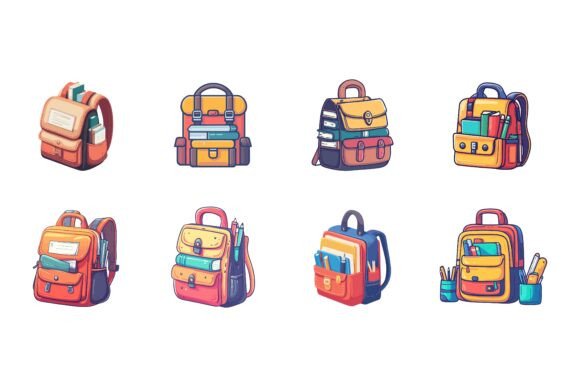
Finding the right visual assets can determine how quickly a project moves from concept to completion. A well-crafted School Bags Set of vector illustrations offers more than decorative elements. It provides ready-made components that can shape the visual direction of educational materials, branding campaigns, product mockups, and editorial layouts. The strategic value lies not simply in having access to backpacks and satchels rendered in crisp vector form, but in understanding how to deploy these illustrations so they serve a larger purpose.
Many designers and business owners overlook the practical weight of selecting source files that integrate smoothly into existing workflows. When an illustration collection arrives with AI, EPS, and JPG formats included, it removes friction from the production process. You can open the native Illustrator file for detailed customization, use the EPS for cross-software compatibility, and drop the JPG previews into quick mockups without converting anything. This kind of format flexibility means the School Bags Set becomes usable across print collateral, web interfaces, app symbols, and infographics without requiring separate purchases or time-consuming conversions.
Why Organized File Structure Matters More Than It Seems
Open a disorganized vector file and you immediately lose time hunting through unnamed layers, grouped objects that refuse to ungroup cleanly, and colors applied inconsistently across elements. The mention of a neatly organized file and layer structure in this collection deserves attention because it speaks to production readiness. When each backpack, lunch bag, and school satchel sits on its own clearly labeled layer, you can isolate the exact element you need, recolor it, rescale it, or combine it with other graphics without disturbing the rest of the artwork.
This level of organization also reduces the cognitive load during creative work. Instead of wrestling with the file itself, you can focus on how the School Bags Set fits into the broader design system you are building. For small business owners preparing back-to-school promotions or educational publishers laying out textbook chapters, that efficiency translates directly into faster turnaround and fewer revision cycles.
Consistent Detailing as a Foundation for Brand Trust
Perfection in details and consistency across an illustration set might sound like marketing language, but in practice it carries significant implications. Inconsistent line weights, mismatched lighting angles, or varying levels of detail across a set can make branded materials look amateurish. When a collection maintains uniform styling throughout every element, the visuals contribute to a cohesive identity rather than undermining it.
Think about a tutoring center that uses the School Bags Set across its website, printed flyers, and social media graphics. If each bag illustration shares the same stroke thickness, color palette logic, and proportional scale, the repeated exposure builds visual recognition. Parents scrolling through a feed might not consciously notice the consistency, but their perception of professionalism and reliability subtly improves. The opposite also holds true—jarring inconsistencies can erode trust even if the viewer cannot articulate why.
When to Reach for a Pre-Made Illustration Set
There are moments when custom illustration work makes strategic sense, and moments when a well-built library of ready-to-use assets saves resources without compromising quality. The School Bags Set fits scenarios where speed meets a need for polish. Consider these practical applications:
- Seasonal marketing campaigns: Back-to-school promotions demand themed visuals quickly. Having editable bag illustrations lets you customize colors to match brand guidelines and swap elements for different ad sizes.
- Educational app interfaces: Icons representing student supplies, lockers, or classroom tools can use bag illustrations as navigation cues or category markers.
- Print materials for schools and programs: Enrollment packets, supply checklists, and orientation guides benefit from clear, friendly illustrations that guide the reader's eye.
- Infographics about education spending or school preparation: Data visualizations gain warmth and relatability when paired with thematic illustrations rather than generic chart elements.
- Product mockups and e-commerce displays: If you sell or review school bags, having vector illustrations lets you create comparison charts, sizing guides, or feature callouts.
In each case, the decision to use a pre-made set should come from a clear assessment of time, budget, and the level of uniqueness the project demands. For most small to mid-scale needs, a high-quality set provides ample flexibility without the cost and wait time of commissioning original artwork.
Customization Capabilities and Creative Control
One of the practical advantages highlighted in this collection is the ease of editing—changing colors, modifying shapes, and adapting the illustrations to specific requirements. This matters because raw vector files can range from beautifully editable to frustratingly locked down, depending on how the original artist constructed them. A set designed with modification in mind uses clean paths, avoids unnecessary raster effects embedded in vector layers, and applies colors through global swatches that update across the entire file.
For a freelance designer working on multiple client projects, the ability to recolor a School Bags Set to match different brand palettes means one purchase serves many assignments. For a marketing manager at an educational products company, it means seasonal variations can be produced in-house without sending every small tweak back to an external designer. This kind of creative control supports faster iteration and more responsive campaign management.
Cross-Platform Compatibility as a Strategic Factor
The inclusion of files designed for both Mac and Windows users signals an awareness of diverse production environments. Teams that include designers on different operating systems, or that collaborate with external partners who may use alternative software, avoid the compatibility headaches that can stall projects. An EPS file opens reliably in CorelDRAW, Affinity Designer, and older versions of Illustrator. An AI file preserves the full editability for those working natively in Adobe's ecosystem. A JPG preview serves quick placement in presentations, documents, or wireframes.
This multi-format approach also future-proofs the asset investment. If your software stack changes over time—moving from one design application to another, or shifting portions of your workflow to browser-based tools—having multiple file formats increases the likelihood that the School Bags Set remains usable years after acquisition.
Avoiding the Pitfalls of Using Illustrations Without Clear Intent
Visual assets, no matter how well-designed, can weaken a project when added without strategic purpose. Dropping school bag illustrations into a layout simply because they are available creates visual clutter rather than communication. Before incorporating elements from the set, ask what function each illustration serves. Does it draw attention to a key message? Does it help explain a process or category? Does it establish a mood or tone consistent with the brand voice?
Another risk involves mismatched context. A playful, brightly colored backpack illustration might feel out of place on a serious policy document about education funding, just as a minimalist satchel might feel too austere for a kindergarten enrollment flyer. Selecting the right illustration from the School Bags Set means matching the visual tone to the content's purpose and the audience's expectations. The set provides options; your judgment determines whether those options strengthen or dilute the communication.
Integrating Illustrations into a Larger Design System
Beyond single-use scenarios, illustrations from a collection like this can become part of a repeatable design system. If you establish guidelines for how school-themed icons and spot illustrations should appear across your materials, the School Bags Set becomes a reusable module within that system. Consistent sizing, padding, color treatment, and placement rules create a signature style that audiences begin to associate with your content.
For a publisher producing a series of educational workbooks, this approach means each cover and interior spread feels part of the same family. For a school district communications office, it means parent newsletters, website banners, and social media posts share a recognizable visual thread. The illustrations themselves are commodities; the way you apply them consistently over time builds the distinctive identity.
Making the Purchase Decision Based on Long-Term Value
When evaluating whether a specific School Bags Set merits the investment, look past the immediate project at hand. Consider the frequency with which school or education themes appear in your work calendar. If you produce annual back-to-school content, quarterly education-related campaigns, or ongoing materials for academic clients, the cumulative usage justifies acquiring a versatile, well-organized set. The per-use cost becomes negligible, and the time saved over repeatedly sourcing or creating similar illustrations adds up meaningfully.
Also weigh the learning curve. A set that requires hours of cleanup before it is usable may cost less upfront but more in hidden labor. The details provided about organized layers, consistent detailing, and easy editability suggest a production-ready asset that minimizes that hidden cost. This is the kind of practical evaluation that separates a smart resource investment from a folder of files that collects digital dust.
Practical Editing Approaches for Non-Designers
While the full editing potential requires vector software, users without deep design experience can still benefit from the School Bags Set. JPG previews can be cropped, resized, and placed into documents, presentations, or social media templates using basic tools. For those willing to learn a few essential Illustrator or Affinity Designer skills—selecting objects, changing fill colors, and exporting at specific dimensions—the customization possibilities expand considerably without a steep learning curve.
Tutorial content for basic vector editing is widely available, and the skills learned while adapting these illustrations transfer to other design tasks. A small business owner who masters recoloring a backpack illustration to match their brand palette gains a capability they can apply to icons, logos, and other visual elements in the future. The set becomes not just a product but a practical entry point for developing in-house design competency.
Weighing the Role of Stock Assets in Original Work
There can be a tension between using pre-made illustrations and creating fully original work. This tension is worth addressing directly, especially for creative professionals who take pride in custom output. Using a School Bags Set does not diminish originality when the illustrations are integrated thoughtfully into a unique composition, paired with custom typography, layered with original photography, or modified substantially to fit a specific creative direction.
Many of the most effective visual campaigns combine stock elements with custom work. The illustrations handle the heavy lifting of object representation—what a school bag looks like—while the surrounding design, messaging, color choices, and layout express the unique brand perspective. Viewing the set as raw material rather than finished design opens up more creative possibilities than treating it as a plug-and-play solution.
The strategic value of any illustration collection ultimately depends on the intentions behind its use. When you approach a School Bags Set with clarity about your audience, your message, and the role visuals play in supporting that message, the files become tools for efficient, effective communication. When they are used without that clarity, they risk becoming just more visual noise. The difference lies not in the illustrations themselves but in the thinking applied before opening the first file.